
Lectures / workshops / staff development
Knowledge that changes how you see training.
I deliver education on strength and conditioning in volleyball and team sports, skill acquisition, load management, coaching and data interpretation. I work with coaches, teachers, physiotherapists and people responsible for athlete development.
I explain mechanisms, analyse examples and encourage participants to test their assumptions. Each participant leaves with frameworks that help them observe more accurately, design more deliberately and justify their decisions.
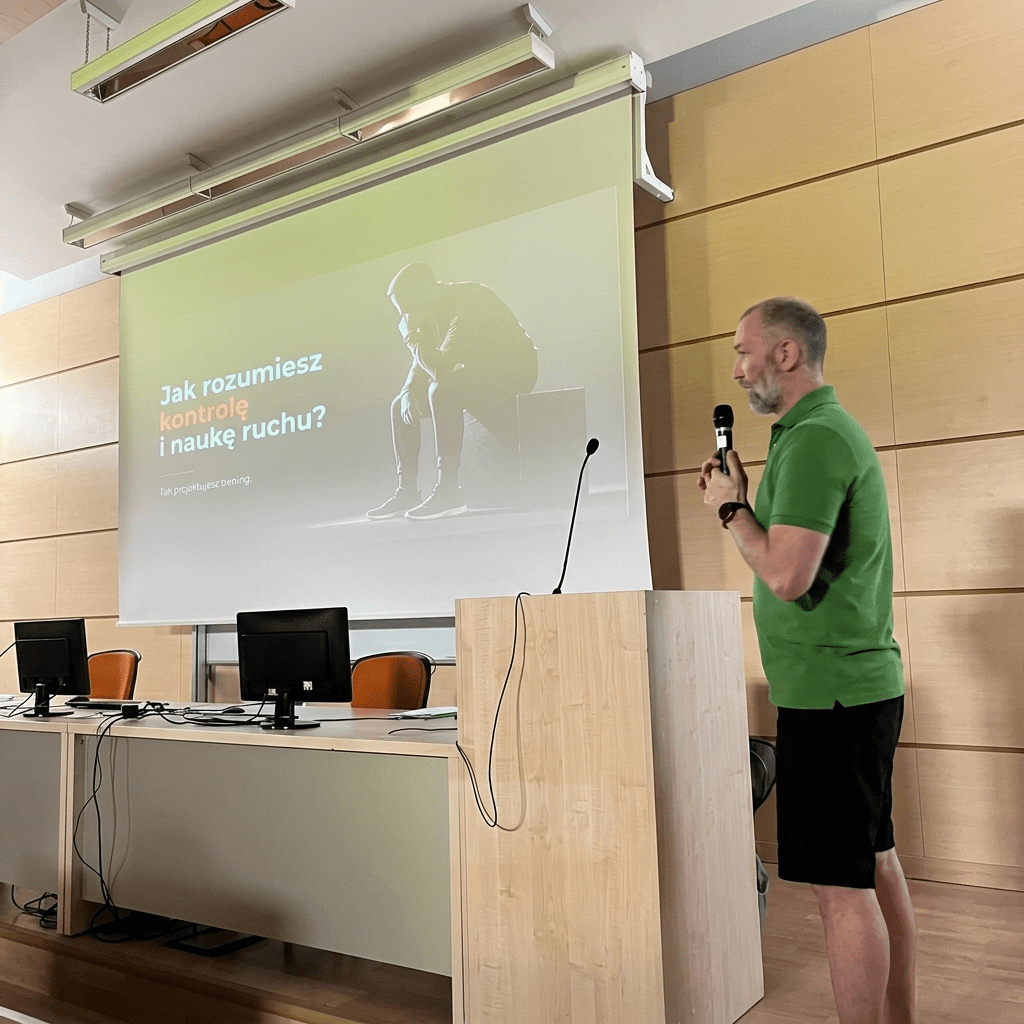
Educational practice
Good education starts with a good question.
The best session does not end with a set of slides. It should clarify the problem, open up discussion and leave participants with tools for independent thinking.
Core workshop topics
I do not offer one recipe for every problem. I help participants develop a way of reasoning that can be applied in their own working environment.
From physical qualities to performance in sport
Improving strength, power or speed increases an athlete’s potential. On its own, however, it does not tell us how their behaviour will change in competition. We examine the demands of the sport, the role of training methods and the evidence needed to judge training value carefully.
Needs analysis, selecting appropriate stimuli, the role of general and specific training, assessing progress and the limits of claims about transfer.
Participants build a clear line of reasoning from the sporting problem, through the goal and training method, to the expected adaptation and criteria for evaluation.
Skill acquisition and learning-environment design
Sporting skill emerges through the athlete’s relationship with the environment. We examine how the goal, rules, space, equipment and the behaviour of other people shape the solutions that emerge.
Perception–action coupling, affordances, intentionality, representative learning design, constraints and the role of variability.
Participants design and adapt tasks while preserving information that matters for action and deliberately shaping the space for exploration.
Agility — information, movement and time
A change of direction can be planned. Agility requires action to be adapted to a situation as it unfolds. Direction, timing and movement strategy depend on the opponent, a team-mate, the ball and the athlete’s capabilities.
Acceleration, deceleration, the distinction between change of direction and agility, information sources, time pressure and progressive complexity.
Participants create a progression that connects physical development and movement technique with tasks requiring perception–action coupling.
Testing, monitoring and decision-making
A measure has value when it answers an important question, is sufficiently reliable and can influence action. We examine what a result describes, how to distinguish signal from normal variation and how to communicate uncertainty.
The purpose of testing, measurement validity and reliability, error, individual variability, load monitoring and decision thresholds.
Participants move from the initial question, through measurement selection and result interpretation, to possible training decisions.
Coaching and an environment that supports development
Communication, session structure and relationships influence engagement and learning. We examine how to combine clear direction with agency, appropriate challenge and space for athletes to find their own solutions.
Autonomy, competence and relatedness, goal setting, attentional focus, feedback, coach questioning and shared athlete responsibility.
Participants analyse communication and session organisation, then design solutions that support motivation, learning and self-regulation.
Topics grounded in educational practice
These are topics I have delivered through lectures, workshops and staff development in Poland and abroad. I tailor the scope each time to the sport, participants’ level and the problem they need to solve.
Strength and conditioning in volleyball
Game demands, strength and power development, training organisation and the role of physical preparation in the wider process. The starting point is the athlete’s role and team context, not a list of exercises.
Load management in team sports
How to connect the training plan, information about athlete readiness and the demands of competition. We use data to support staff decisions — always in relation to context, observation and the quality of on-court performance.
Movement technique, speed and agility
Acceleration, deceleration, change of direction, changes of pace and high-speed running. We connect movement mechanics with perception and action selection so that training reflects the real demands of the game.
Skill acquisition and nonlinear pedagogy
Representative task design, manipulating constraints, functional variability and feedback. Participants learn to build an environment in which the athlete identifies solutions and adapts movement to the situation.
Transfer from training to sporting performance
How to judge whether a change in a test result or improvement in a physical quality expands what an athlete can do in the game. We examine the path from adaptation to its use in a specific sporting task.
Data and collaboration within the coaching team
How to turn measurements into a clear picture of the situation, a shared language and better decisions. We discuss collaboration between the strength and conditioning coach and head coach, and how to communicate conclusions without oversimplifying the complexity of sport.
The format follows the purpose.
I agree the scope, duration and organisational requirements around the audience’s needs. Sessions are available in Polish and English.
Lecture with discussion
A structured exploration of the chosen topic, analysis of examples and discussion of implications for practice.
Task-based work
Designing and adapting tasks, analysing materials and a practical component tailored to the topic and setting.
Staff development
Work centred on a real organisational problem: its goals, constraints, communication language and implementation options.
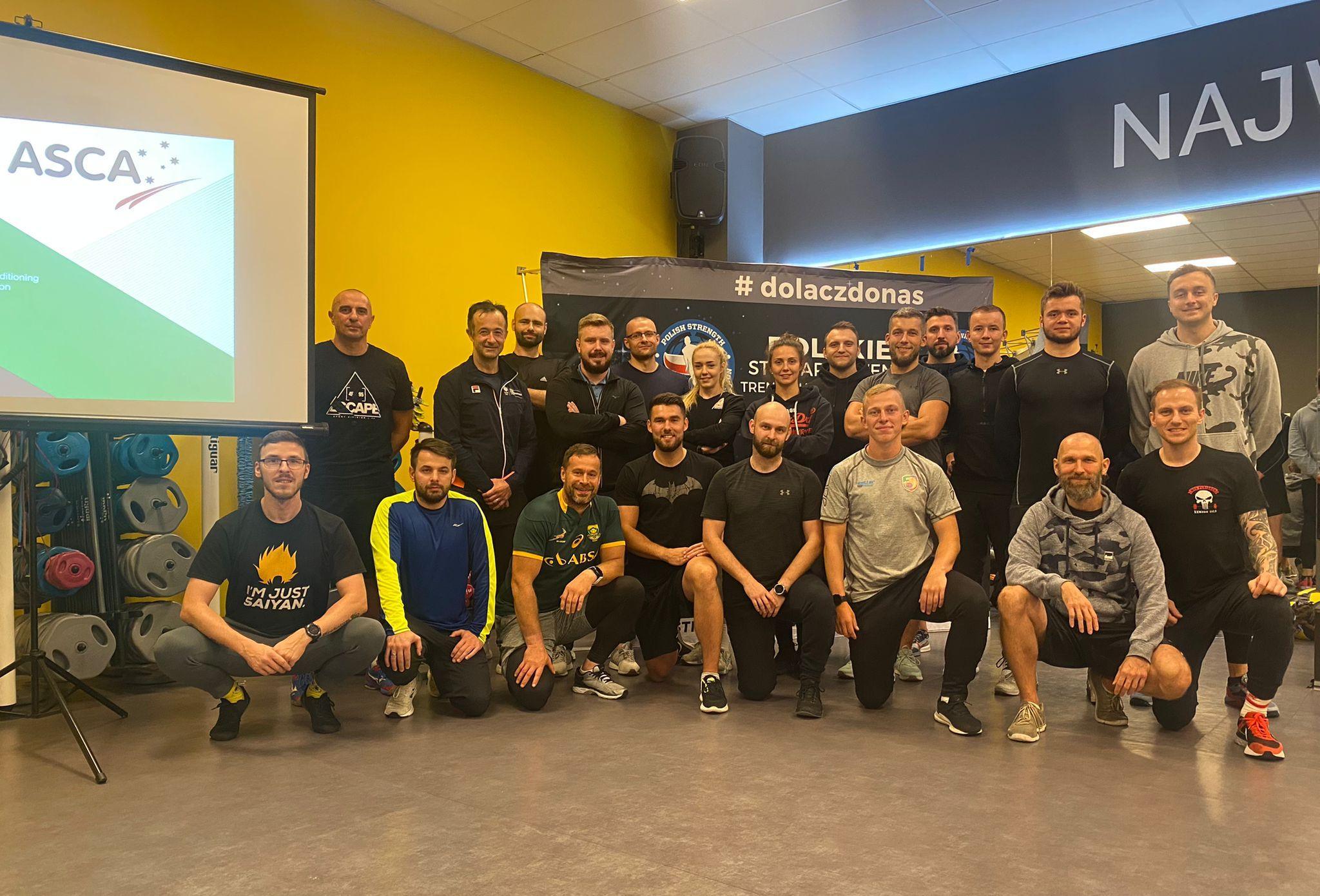
Coaching practice and educational experience
I am a strength and conditioning coach, physical education teacher and skill acquisition specialist. I have worked in club and national-team sport in Poland, India and China. I have delivered lectures and workshops for coaches, teachers and students.
I bring questions from day-to-day practice, experience of different sporting cultures and a willingness to test my own assumptions critically. Theory matters to me when it helps us see a problem more clearly and make better-founded decisions.
Let’s build the session around a real problem.
Tell me who the participants are, what challenges they face in their work and which topic matters most to them. If you already know the date, location and expected group size, include those details in your message.